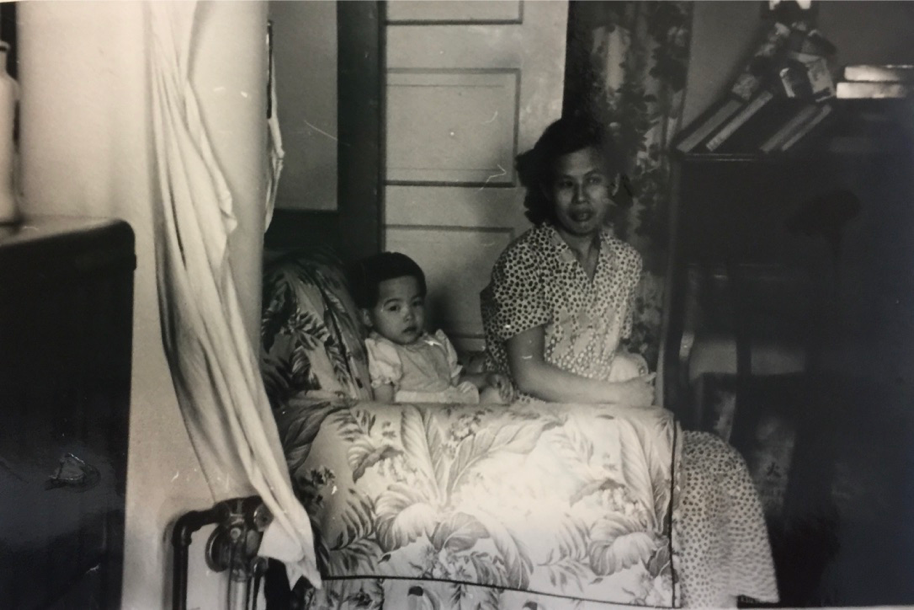
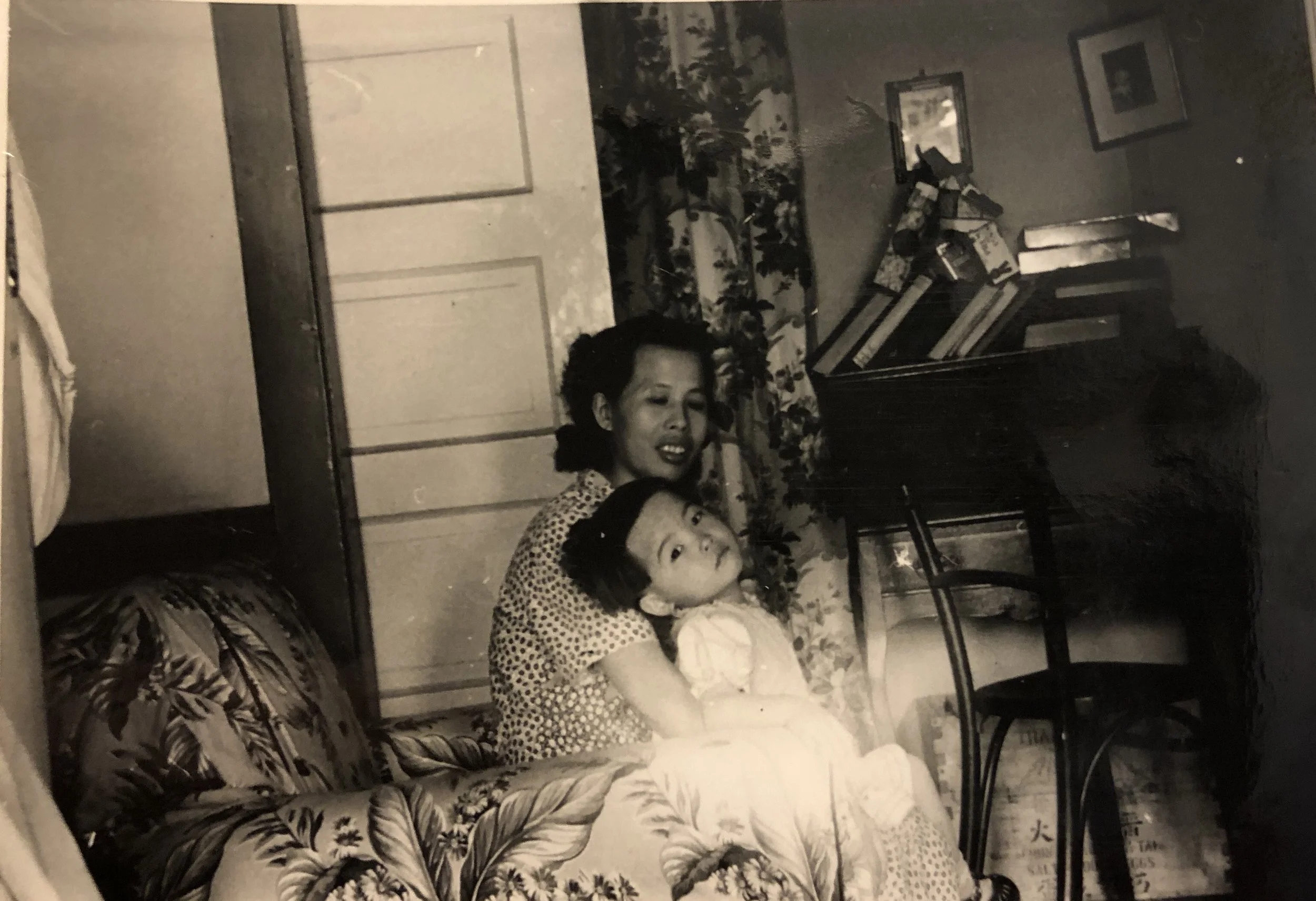
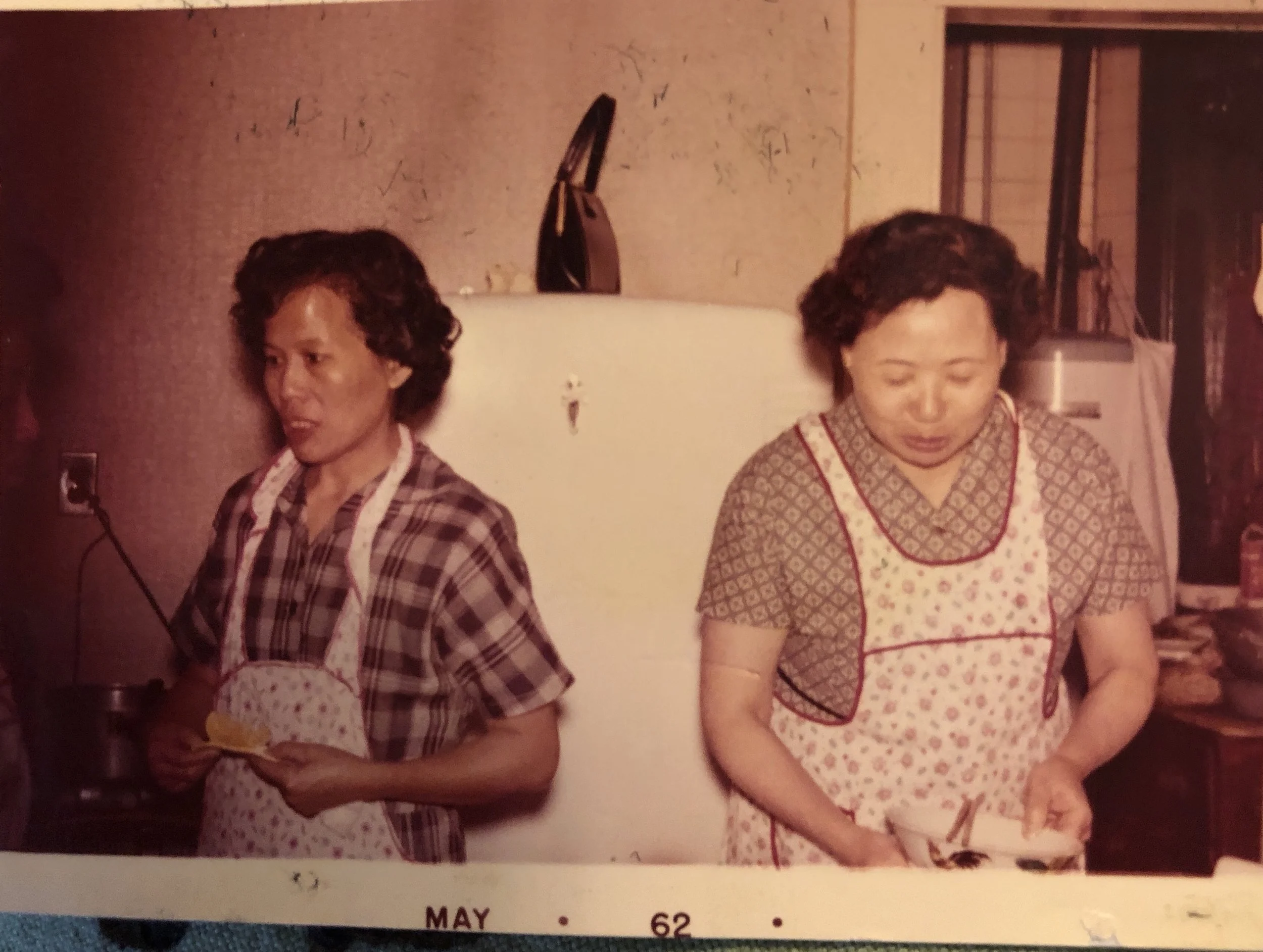
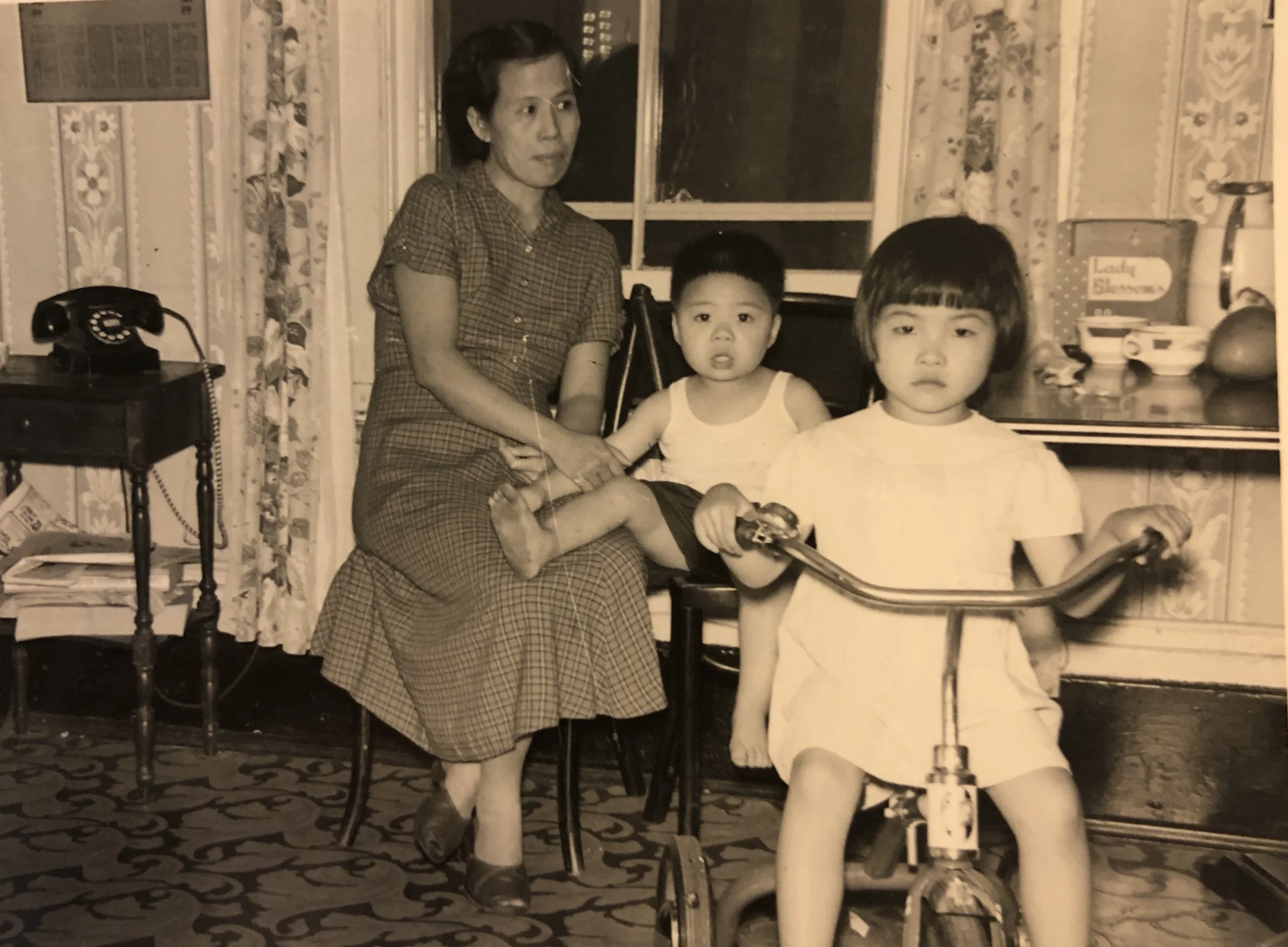
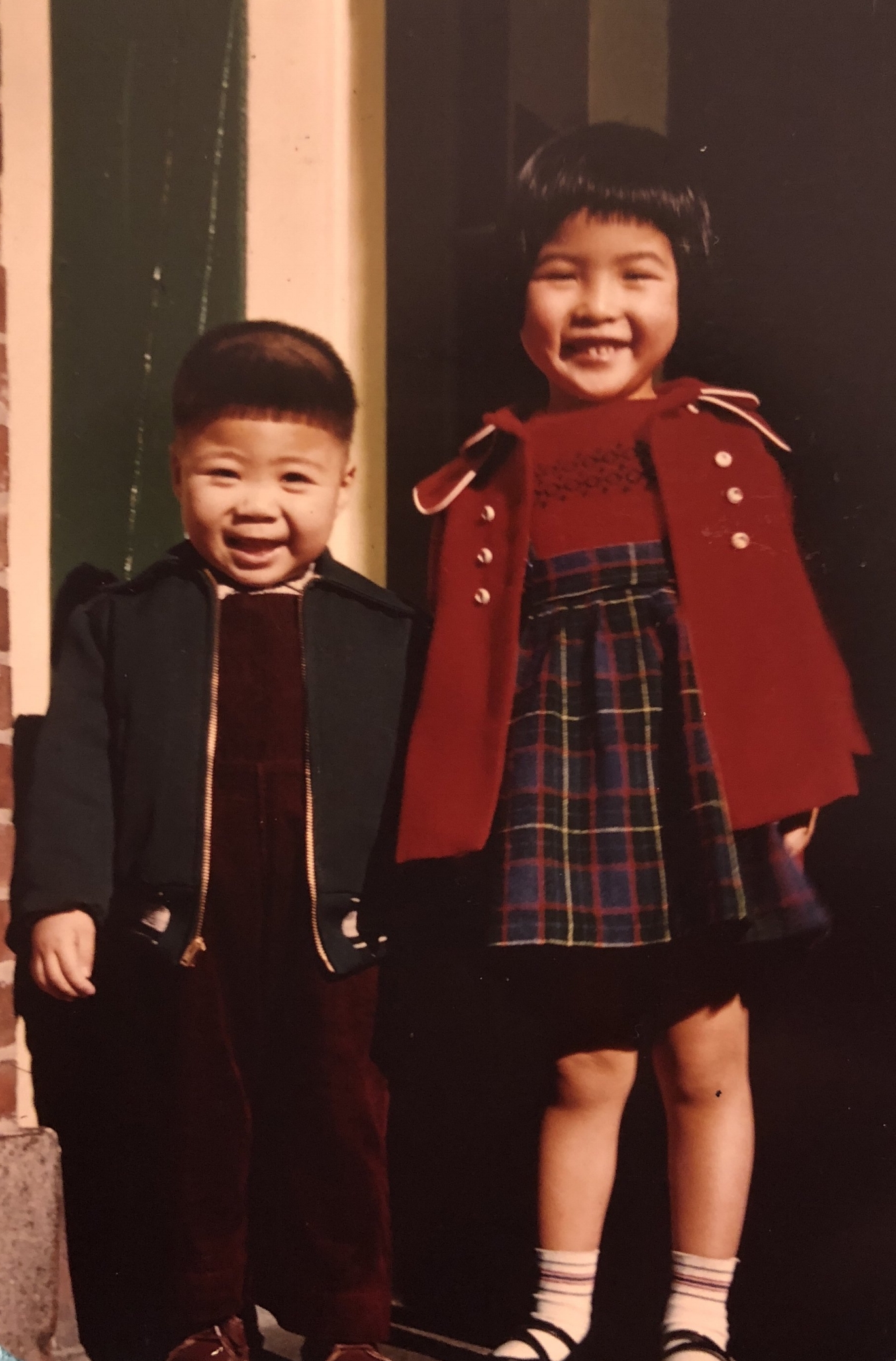
My mother and my friends’ mothers stayed home stitching piecework, earning 50 cents a shirt, using their own sewing machines and their own electricity. The young brides soon joined them. My father and I helped by flipping collars and cuffs with a sharpened chopstick, folding the shirts, and tying them into neat bundles for the factory owner to pick up. As I grew older, I sewed darts by the hundreds. I had more practice sewing darts than a girl normally might have or would want to have. By the time I was eleven, I designed and sewed my own clothes. Zippers were hard for me so I enlisted my friends, Karen and Susan’s, help. We enjoyed sharing dress patterns, picking out decorative rick rack and cloth, matching by texture and by color. I thought store-bought clothes, all alike, and lined up in the department store racks, were boring and couldn’t understand why anyone wore them. At 2:00 in the afternoon, as regular as clockwork, I watched the parade of fathers marching down Hudson Street to meet and talk at the coffee shops before starting work at the restaurants. Kneeland Street was the crucial divide between residential and commercial life. For me, crossing that wide, busy street into the commercial area, was a big deal. Fathers returned home at 2:00, and sometimes 3:00, in the morning. It was commonly accepted that loud outdoor play began only after 12:00 noon so as not to disturb the fathers’ rest.
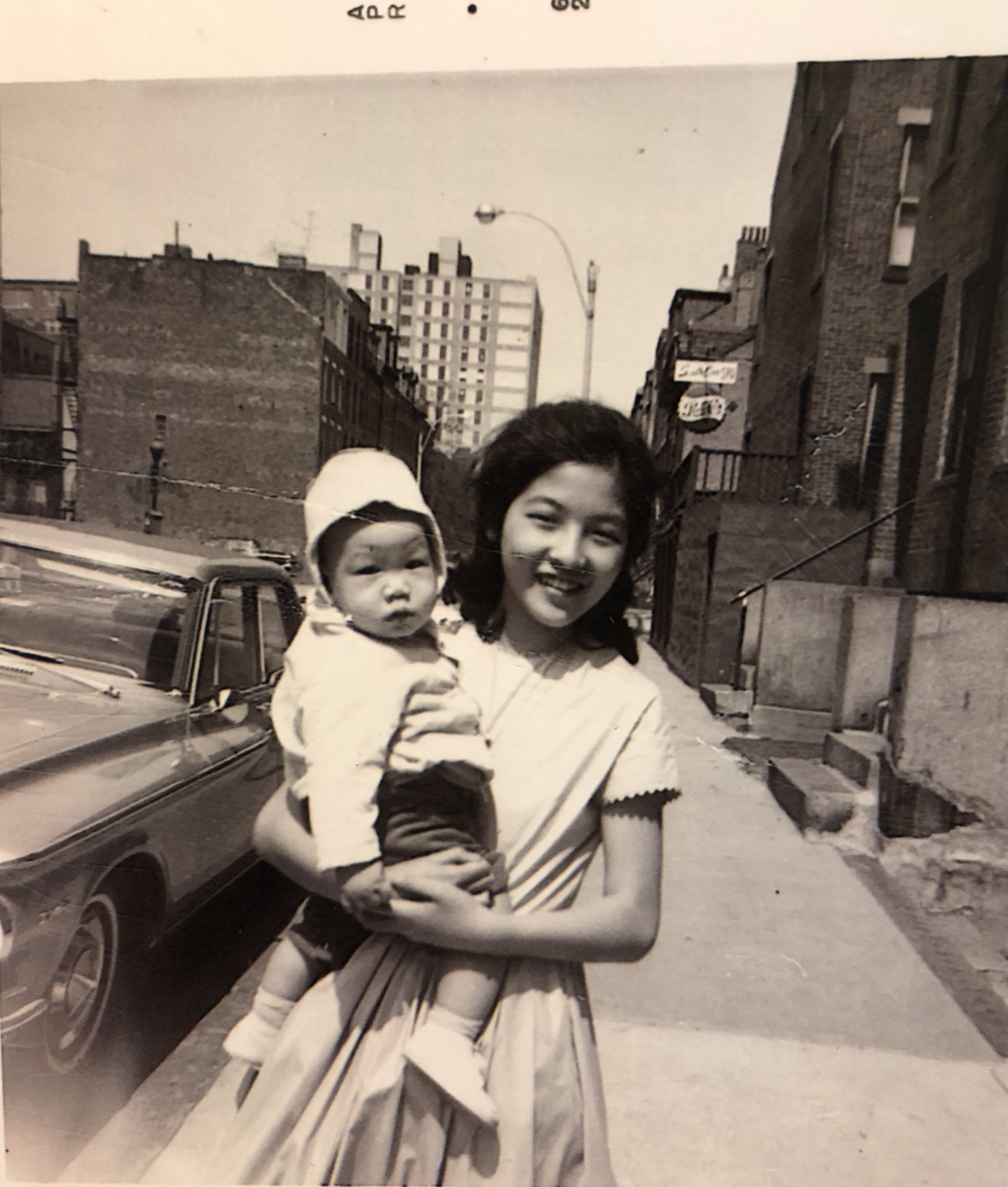
When I was born, my parents lived at the upper end of Hudson Street, at No. 133, and we moved across the street to the second floor of No. 116 when I was a young child. There I spent my childhood. An abandoned gas station sat at the upper end of the block. My friends and I played “House” there, using the foundations of old gas pumps as “stoves.” We gathered wild dandelions and the leaves of the hardy ailanthus tree, that grew by the railroad tracks, for our green vegetables. At the lower end of the block on the corner of Oak Street was a Syrian grocery shop in the basement. I loved going there with my mother to buy nuts. Sometimes, I went in by myself, just to walk around and look. At age nine, I enjoyed a measure of freedom. I walked down the steps and took a deep breath as I entered the store, loving the fragrant aroma of pine nuts and olives. The Syrian women shoppers used large spoons with long handles and holes to ladle out the olives from large wooden barrels. As they slurped the green ones, then the black ones, the large ones, and then the small ones, they chattered and chirped in excited voices in their Syrian language. I wished I could do the same: ladle and taste olives and speak that musical language, too.
At Jimmy’s Spa, on the opposite corner, I bought ice cream cones for ten cents. “Vanilla, Chocolate, or Strawberry?”, Jimmy asked, in his cheerful voice. “Vanilla, Chocolate, or Strawberry”, these words formed the beginnings of my first English vocabulary. With the ice cream, though, came a far more important lesson. I learned that tragedy could be ameliorated by acts of kindness. One day, when my scoop of ice cream fell onto the ground with my first lick, I stared at it with disappointment. I was seven years old and I felt all alone with my personal loss and humiliation. To my great surprise, Jimmy gave me an even larger scoop, accompanied by a big smile. I always remembered that act of kindness from one of the very few non-Chinese persons I came in contact with in those days.
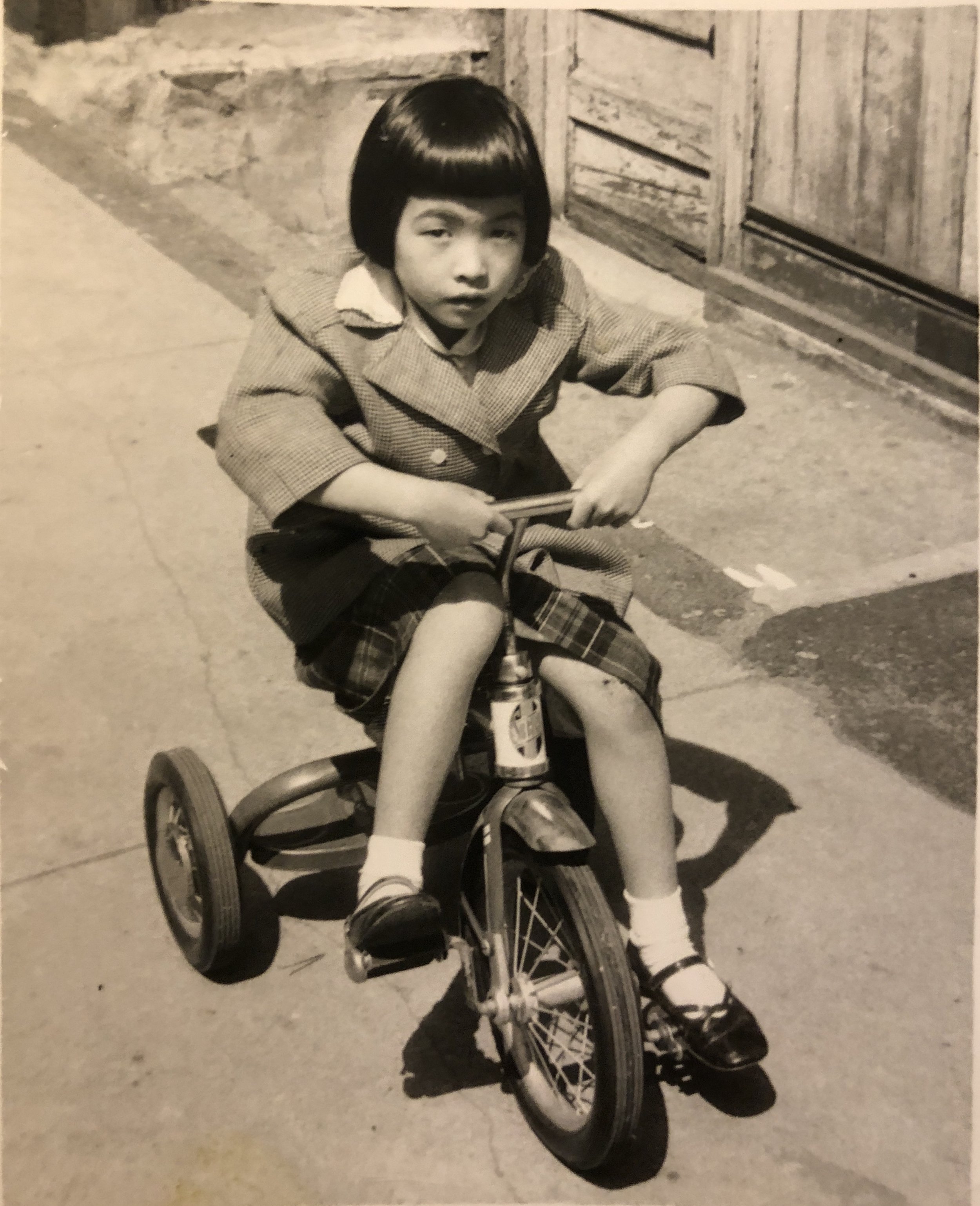
Shared streets and shared toys were our life. An occasional automobile ambled down the street, but for the most part, it was a street free of traffic. One volleyball net strung across the street and one ball made for a fast game of Volleyball. Taishan had a long and illustrious history of producing volleyball champions. It was in our blood and the air we breathed. We knew how to play it without anyone teaching us. A brother and sister owned a pair of bikes, a boy’s bike and a girl’s bike. The whole street shared that luxury. We each took turns riding them down the length of the street, adventuring around the corner by way of Harvard Street, cutting through onto Tyler Street. That is how we practiced being brave, and turning corners without falling over.
A piece of chalk, a few lines drawn on the sidewalk and any small object, like a pebble, made for a game of Hopscotch with our best buddies. Kick-the-Can in the middle of the street was excitement itself. The only equipment needed was one can and good legs. There was the leaping and blindfold game of, “Buck Buck Buck Lo Si Buck, How many fingers have I got up?” the Chinese American equivalent of “One Two Three, Red Light”. One child covered his eyes and leaned against a wall, with his or her back turned, and each child, in turn, hopped onto the stone ledge behind him, calling out “Buck Buck Buck Lo Si Buck! How many fingers do I have up?” The child guessed with eyes covered and then turned around. If he or she were wrong, another child leaped onto the ledge and repeated the chant. The ledge filled up fast with children tucked one behind the other. If he or she guessed correctly, then it was time to switch and start again.
On summer nights, after sewing and cooking, mothers conversed on stoops, while fathers worked at restaurants. It was too hot to stay home. There were only small electric fans to create a small breeze in the small four room apartments. We played Volleyball and Kick- the-Can under the street lamps. Hide-and-Go-Seek in the shadows was a special challenge. Hiding in shadows, being very still and not moving, could become a useful life skill.
Stoops were ideal for board type games although none of us owned board games, per se. We only played board games and ping pong at the Maryknoll Sisters Center on Tyler Street. Baseball card collections were treasures. I played flip ups with my cards on the top stoop. Other days, my friends and I sewed little square rice bags with rice taken from our mothers’ rice bins and scraps of cloth from their sewing. While their backs were bent over their machines, we scurried out handfuls of rice and scraps of cloth onto the stoop, reminding each other to take a needle and a spool of thread. We sewed together and had our own sewing circle by age nine. Each set had its unique design and we admired each other’s handiwork. We shared grains of rice and pieces of cloth so there was enough for everyone to make a complete personal set. Our hands and fingers flipped the little rice bags and caught them in the air with great speed, our gold charm bracelets jangling, playing the Chinese equivalent of “Jacks”. We played this game on the top stoop which was wider than the other steps. We sat on the narrower stoops below to talk and whisper and share our growing Chinese American views about life. Once I discovered, around age seven, that most of the grownups didn’t know English and we did, we had our own secret code: English. We enjoyed a great deal of privacy, sharing our observations, our truths, and misconceptions, as if they were truths until they were proven false. This give and take of conversation taught us to listen to each other and that ideas and opinions were changeable. My father, however, spoke fluent English, so I mistakenly thought, if I spelled my words to my cousin, like “Do you have any M-O-N-E-Y?”, my dad would not know what I was saying. I was wrong, but my dad played along, as if he didn’t know my secrets at all, and I truly appreciated that.
Woven clothesline made sturdy jump ropes. A clothesline never used an entire length of rope so our mothers always had leftover rope. We jumped to classic American jump rope rhymes, like “M-I-SSI-SSI-PPI”, graduating eventually to Double Dutch. We practiced high jumping by having two people hold the two rope ends at ankle height, then moving to knee height, then waist, then shoulder, then ear, then forehead, then above our heads. We jumped higher and higher by leaping sideways. For variety, we linked rubber bands together and made Chinese Jump Ropes. We warmed up by twirling the elastic rope around our ankles first once, then two times, then three times around one ankle, then crossing both ankles, and jumping out of its confines, backwards and forwards, in a series of patterns. Then, we began the game of “Chinese Jump Rope” with one child each holding an end and moving the elastic rope up in increments. We jumped higher and higher, by leaping sideways, and hooking our ankle around the rubber bands, just so, and around, and catapulting over to the other side. We admired whomever could leap the highest over the elastic rope, in the most graceful of leaps and flips, and we tried to better our jumps each time, even jumping at heights above our heads.
One time, a father died. I watched his three little girls, in shiny black braids tied with black hair ribbons and dressed in black shirts and black skirts, leap higher and higher over the elastic rope, every day, for a month. When a child loses someone that she loved, but did not have the words for that hurt yet, perhaps running and leaping into the air sideways, and catapulting higher and higher over to the other side, may be a good enough balm for the sorrowful soul.
When we needed a break or to decide on turns, we played the hand game, “Ching Chang Foo” also known as “Paper, Rock, Scissor,” but we never called it that, only “Ching Chang Foo”. Sometimes we had money to buy strands of plastic strings called “gimp”. We sat and wove gimp together and learned new patterns from each other, using different color pairings of plastic gimp string to create new and unique designs. Pink and white, green and blue, yellow and orange all looked good. I hung my roller skate key on the gimp chain around my neck. I needed that key to adjust the width of my roller skates so it was important not to lose it. Nobody seriously locked their houses so we seldom needed house keys. I knew how to open my friend, Karen’s front door with a special kick followed by a nudge and how to climb up the ledge to knock on my next-door neighbor, Mary’s first floor window, to get her attention and to ask her if she wanted to go to St. James Church on Sunday morning. Religion, for us, was a personal choice that did not involve our parents and we seldom rung doorbells.
On Sundays after church, I bought comics from Carl Martin’s Drugstore. I pilfered a dollar from my dads’ Maxwell House coffee can where he threw his tip money every night. I always took only one dollar. I knew he worked hard to earn it. Comics cost ten cents apiece and twenty-five cents for the Giant Special. I traded comic books with my friend, Bingy, so I had twice as many comics to read. His American name was James Fong but only the teacher called him that. His mother called him “Bing Doy”, “Little Bing” so he was always “Bingy” to us.
On Sunday evenings, I usually walked down to the lower end of Hudson Street to “Doofy’s”, a store in the basement across from the YMCA. Doo Foon Bak had a gray balding head, a young wife, and three little girls, with thick, shiny, black braids, running between the store shelves playing tag. It was the only place that stocked American food like mayonnaise, ketchup, white bread, and cold cuts. Sometimes, on a busy Sunday, my mother and I forgot to buy ham, my American food for my week’s school lunch. So, on Monday morning, I brought two slices of Wonder Bread to my friend, Karen’s, house and told her mother, “Ngoi a Ma m ge ack mi ham.” With her usual friendly voice, soft smile, and twinkly eyes, she asked, “Ah-Hing, ni jung yi hek Jel-lee, mo jung yi hek Marshee-Mello, ah?” A golden opportunity. I always said “Marshmallow!” because my parents did not allow me to eat that. She slathered peanut butter on one slice of bread and marshmallow on the other slice. She wrapped my fluffer-nutter sandwich in waxed paper and handed it to me. Karen rescued her crumpled homework from the trash bin, ironed it with the iron that sat on the ironing board in the kitchen, and put it in her schoolbag with a chuckle. Her mother had thrown it out the night before when she cleared the kitchen table where we did our homework together. Our mothers did not speak, read, nor write English. We knew that and we adapted. Off to school, Karen and I went, walking and chatting all the way.
A bag of Wise potato chips cost a nickel and I relished the chips with an air bubble. I called them “hor bow ahn” chips, the “fried egg chips” because they reminded me of the fried egg my mother put on top of my bowl of rice, oyster sauce drizzled on top, and runny egg yolk oozing onto the white rice. So delicious. I shared the chips with my Chinese School friends in between reciting Chinese texts aloud, memorizing them, and cheating. I felt that cheating was the only reasonable thing to do in that situation and sneaking junk food was my compensation for the extra time required after school and on Saturday mornings.
Every Chinese Lunar New Year, I became rich. My parents gave me five and some years ten dollars each, in fancy red envelopes I saved because they were so pretty. My relatives and neighbors gave me lucky red envelopes with a dollar in each. Two envelopes from a husband and wife made for two dollars from every couple. I could calculate numbers pretty fast in my head. My mother accompanied me to deposit most of the money in my Union Bank account but I could keep some of it in a cigar box where I counted the bills over and over, amazed at my new wealth, thinking of how I would spend it. Every Chinese New Year, my father gave me a small brown paper bag filled with firecrackers and cherry bombs and an incense punk to light them. I lit them on the sidewalk and ran, with a finger plugged in each ear. By age seven, I learned to be quick to avoid injury. On Lion Dance Parade Day, I bought a large box of thick hand-cut french fries for twenty-five cents, at the Gam-Sun, a Chinese restaurant owned by the Wongs on the corner of Kneeland and Hudson Streets, or at the Nile, a Syrian restaurant owned by a Syrian family, on the even side of lower Hudson Street. With the firecrackers popping, the large kettle drums beating their steady rhythm, imitating the heartbeat of the Lion, and smoke all around, my friends and I were in Chinese New Year Heaven.
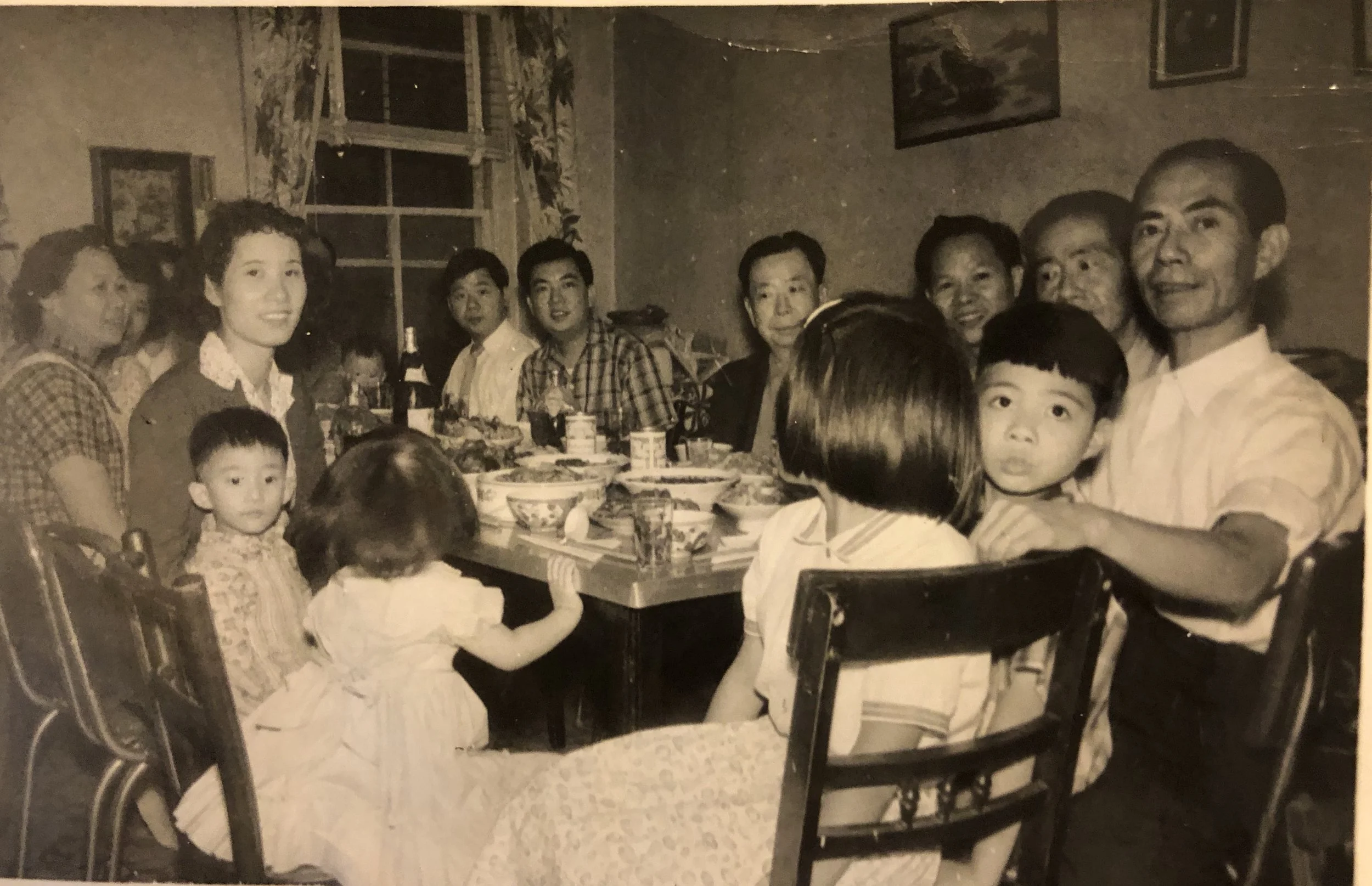
My friends and I knew if we greeted any Chinese adults we met, and there were many about on Lion Dance Day, and we wished them a “A Prosperous New Year to You!”, greeting them in a loud, cheerful voice, “Gung Hay Fat Toy!”, they would invariably smile, reach into their pocket or purse and pull out red envelopes, always two, and give them to us, saying “Grow tall and study hard!” Always. We learned the importance of greeting people with respect, by title as in “Second Uncle!” or “Aunty Chin!” and always in a cheerful voice to show how glad we were to see them. And we were glad to see them. So, it was sincere. Every adult was an Uncle or Aunty and we used our own judgement to figure out whether they were older than our parents or younger because that age rank would determine which form of “Uncle” and “Aunty” we used. “Bak” for older Uncles, ”Sook” for younger uncles, “Moo” for older Aunties, “Sim” for younger Aunties, or “Yi” for some women who were close friends of our mothers. Very old gray hair men and women became “Gung” or “Poh”. Young brides we called “LLoe.” We, children, showed our respect for age and rank, by remembering these differentiations. The holiday celebration always fell on a cold winter day. I wrapped my mittened hands around my warm box of hot french fried potatoes, with my friends gathered around me, huddling and laughing, as we each dipped a french fry into the common pool of ketchup, lots and lots of ketchup. Sharing became my standard for Exquisite Joy.